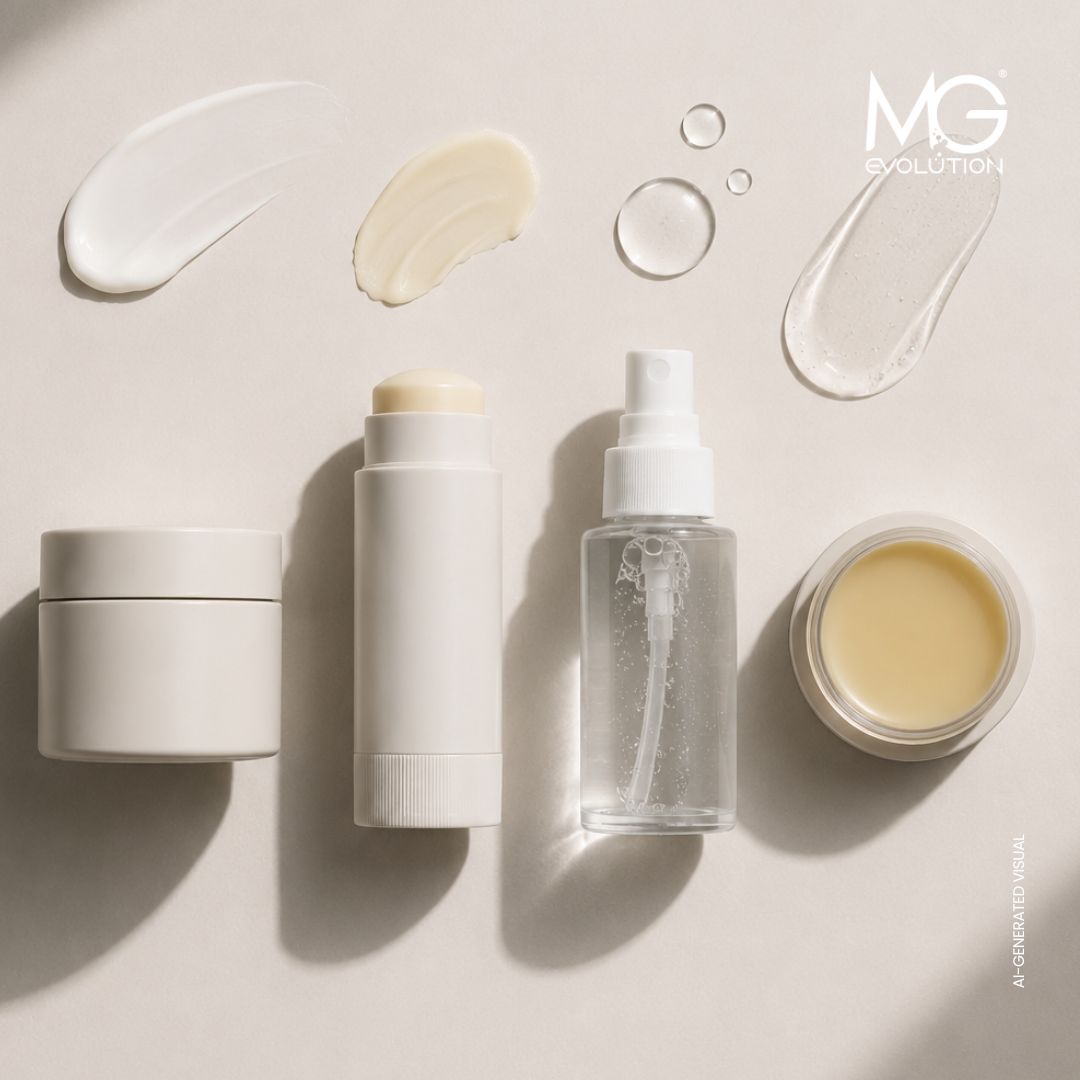
The format of a cosmetic product is much more than its texture, application method or packaging. It is one of the key decisions that influences the entire product development process – from formulation design and raw material selection to manufacturing parameters, testing, filling and the final consumer experience.
That is why the choice between a cream, lightweight emulsion, mist, stick or balm should be considered at an early stage of product development.
Product format starts in R&D
Each product format presents different technological challenges.
For lightweight emulsions, one of the key challenges is maintaining stability while keeping the formulation at a relatively low viscosity. The product needs to remain homogeneous and stable while delivering the expected lightweight feel and comfortable application.
When developing sticks, important parameters include formulation structure, hardness, thermal stability, glide and consistent product transfer onto the skin. A stick needs to maintain its structure during storage and use while releasing the right amount of product during application.
Different requirements apply to mists and sprays. Here, not only the properties of the formulation matter, but also how it works with the dispensing system. Viscosity, spray performance and compatibility with the pump all influence application and the overall user experience.
Balms and transforming textures, such as balm-to-oil formulations, require yet another approach. Their structure determines not only product stability but also the characteristic transformation that takes place during application.
One consumer need. Different technological solutions.
The same consumer need can be translated into several very different product concepts.
A skincare product can take the form of a traditional cream, lightweight emulsion, serum, gel, mist or stick. These formats may target a similar skincare need, but the technological approach required to achieve the desired product properties can be very different.
Product format can influence:
- raw material selection and formulation architecture,
- product stability and consistency,
- manufacturing process parameters,
- sensory properties and spreadability,
- dispensing and application,
- formulation-packaging compatibility,
- the scope of finished product testing.
For this reason, an existing formulation cannot always simply be transferred from one format to another. Changing the product concept may require the composition, structure and manufacturing process to be reassessed.
SPF is a good example of why product format matters
Sun care is one of the clearest examples.
High sun protection can be delivered in the form of a cream, lightweight emulsion, stick or spray. However, this does not mean placing the same formulation into several different packaging formats.
Depending on the format, requirements related to formulation structure, application properties, manufacturing process and the way an appropriate amount of product is delivered to the skin may differ.
For a lightweight emulsion, the challenge may be to combine high sun protection with a light texture and comfortable sensory profile. A stick requires the right structure and consistent transfer onto the skin. With a spray, spray performance and even application become particularly important.
Each format may therefore require a different approach to formulation, processing and application, as well as an appropriate testing strategy for the finished product.
Packaging and formulation need to work as one system
Designing a cosmetic format does not end with the formulation itself.
The formulation needs to be compatible with both the packaging and the dispensing system. A product with a particular viscosity may work effectively with one pump system but not with another. A mist formulation needs to provide the desired spray characteristics. In a stick, the packaging mechanism needs to work effectively with the structure of the product.
This is why formulation and packaging decisions should ideally be considered in parallel rather than treating packaging as the final stage of product development.
Sensory experience is also part of the technology
A modern cosmetic product is expected not only to perform but also to provide the right application experience.
Lightness, absorption, glide, spreadability, the film left on the skin and texture transformation can all influence how consumers perceive a product.
This is why two formulations designed to address a similar skincare need can provide completely different user experiences.
Product format therefore becomes part of the entire product concept – connecting technology with the way consumers interact with the product in their everyday routines.
Product format is one of the starting points
Cosmetic product development should not begin solely with a list of active ingredients or desired claims.
It is equally important to ask:
How will consumers use the product? What texture are we looking for? How should it be applied? What type of packaging will it require? What kind of experience should it provide?
The answers influence the next stages of R&D and allow the formulation to be developed as part of a complete product concept rather than simply as a recipe.
R&D at MG Evolution®
At MG Evolution®, our R&D specialists develop formulations across a variety of formats and textures, taking into account their performance, sensory properties, application, manufacturing process and final packaging.
From lightweight emulsions and serums to creams, gels and mists, as well as balms, sticks and more advanced textures, selecting the right product format is an integral part of the development process.
Because product format is not something decided at the end of development. It is one of its starting points.
Planning a new product? Get in touch and let’s explore the development possibilities.